Refine your nasal tip, reduce a dorsal hump, straighten a crooked nose, or correct breathing difficulties — all in a single, precisely planned procedure.
Your nose is the centerpiece of your face. Rhinoplasty, commonly known as nose surgery or a nose job, is one of the most transformative procedures in cosmetic surgery — reshaping the nose to improve its appearance, correct structural defects, or restore breathing function. The surgery can modify the size, shape, angle, and proportion of the nose to achieve facial harmony.
Dr. Prashant Choudhari is a rhinoplasty specialist in Kolhapur, trained at B.J. Government Medical College, Pune, where rhinoplasty is one of the most frequently performed procedures. His MCh training provided hands-on experience with hundreds of nasal surgeries across cosmetic enhancement, post-traumatic correction, and functional repair — making rhinoplasty his true area of surgical focus.
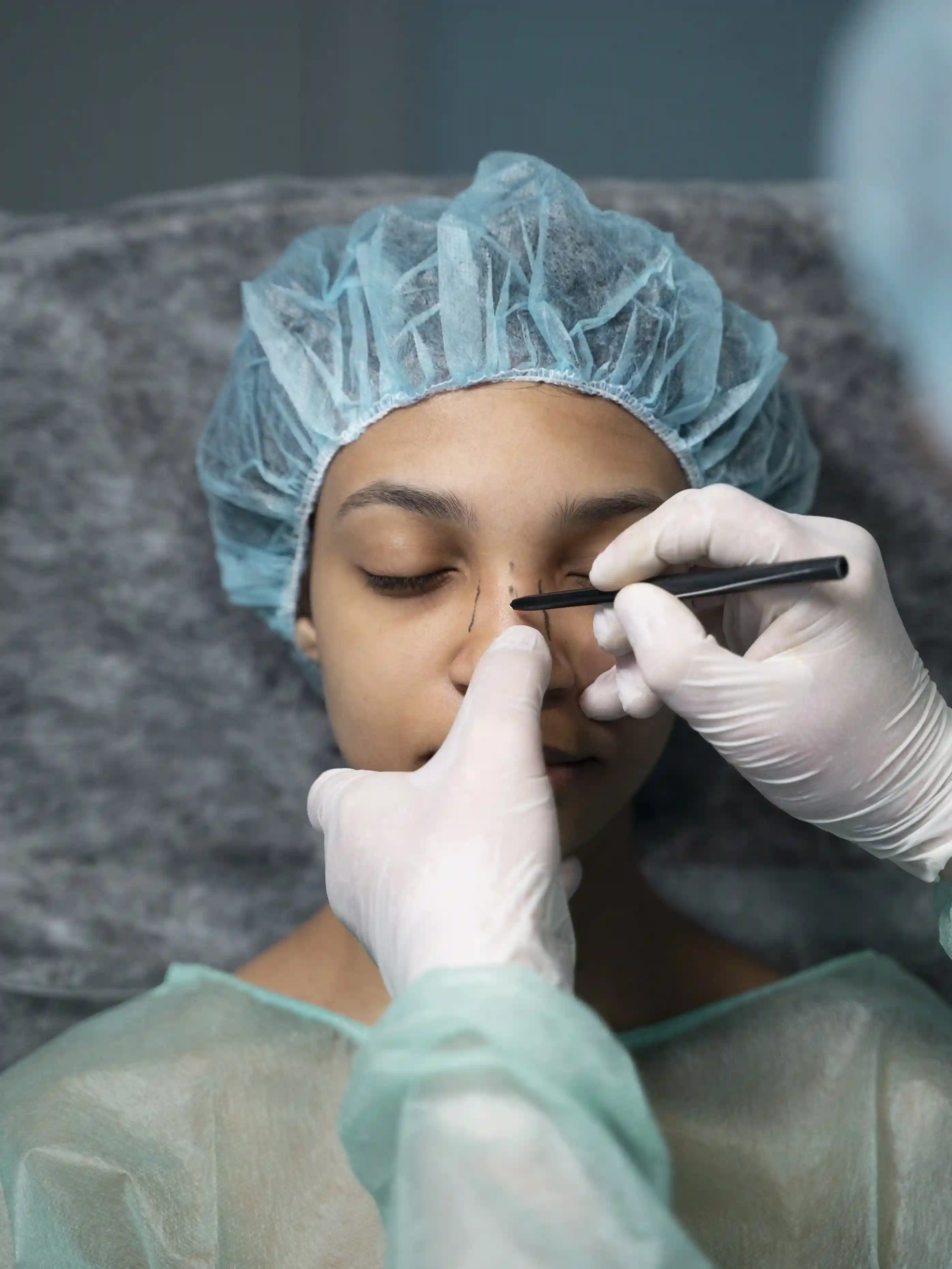
There are two primary approaches to rhinoplasty. Dr. Prashant evaluates each patient individually, based on the complexity of the correction needed, to determine which approach will deliver the best results.
A small incision is made across the columella — the tissue between the nostrils — giving the surgeon direct visibility of the nasal structure. This approach is preferred for complex reshaping, grafting, and revision cases that need precise structural control.
All incisions are made inside the nostrils, leaving no visible external scars. This approach suits patients needing more limited refinement, such as hump reduction or minor tip adjustment, with a typically quicker recovery.
You are unhappy with the shape, size, or angle of your nose.
You have a dorsal hump (bump on the bridge) you want reduced.
Your nasal tip is too wide, droopy, or bulbous.
Your nose appears crooked or asymmetric.
You have breathing difficulties due to a deviated septum or structural issue.
You have post-traumatic nasal deformity from an injury or accident.
You are over 18, in good general health, and have realistic expectations from surgery.
Every nose — and every goal — is different. Dr. Prashant offers a full spectrum of rhinoplasty techniques, tailored to whether your priority is appearance, function, or both.
Reshaping the nose for aesthetic improvement, including hump reduction, tip refinement, and width correction.
Correcting a deviated septum or internal nasal valve collapse to improve breathing.
Reconstructing nose shape and function after fractures or injuries.
Correcting results from a previous nose surgery performed elsewhere.
Tailored techniques that respect and enhance the natural ethnic features of your nose while achieving your desired look.
Dr. Prashant conducts a detailed facial analysis, discusses your goals, and uses reference images to align expectations. Photographs are taken for surgical planning.
Rhinoplasty is performed under general anesthesia in a fully equipped hospital setting with a qualified anesthesiologist.
Depending on the open or closed approach, the nasal skin is carefully lifted to access the bone and cartilage framework. Bone may be filed, cartilage trimmed or repositioned, and grafts placed for structural support.
Incisions are closed with fine sutures. A nasal splint is applied externally, and soft internal splints or packing may be placed for support during initial healing.
You will be monitored post-surgery and discharged the same day or the following morning. Dr. Prashant schedules follow-up visits at Day 3, Day 7 (splint removal), and periodic check-ins over the following months.